
SEO & Marketing
Have You Ever Googled a Business Before Actually Visiting It?
Your Customers Do Too.
Why Your Online Presence May Be Making the First Impression Before You Do
Think about the last time someone recommended a business to you.
Maybe a friend told you about a great contractor. Maybe someone recommended a new coffee shop. Maybe you needed an accountant, insurance agent, attorney, mechanic or photographer.
They give you the name. What do you do next?
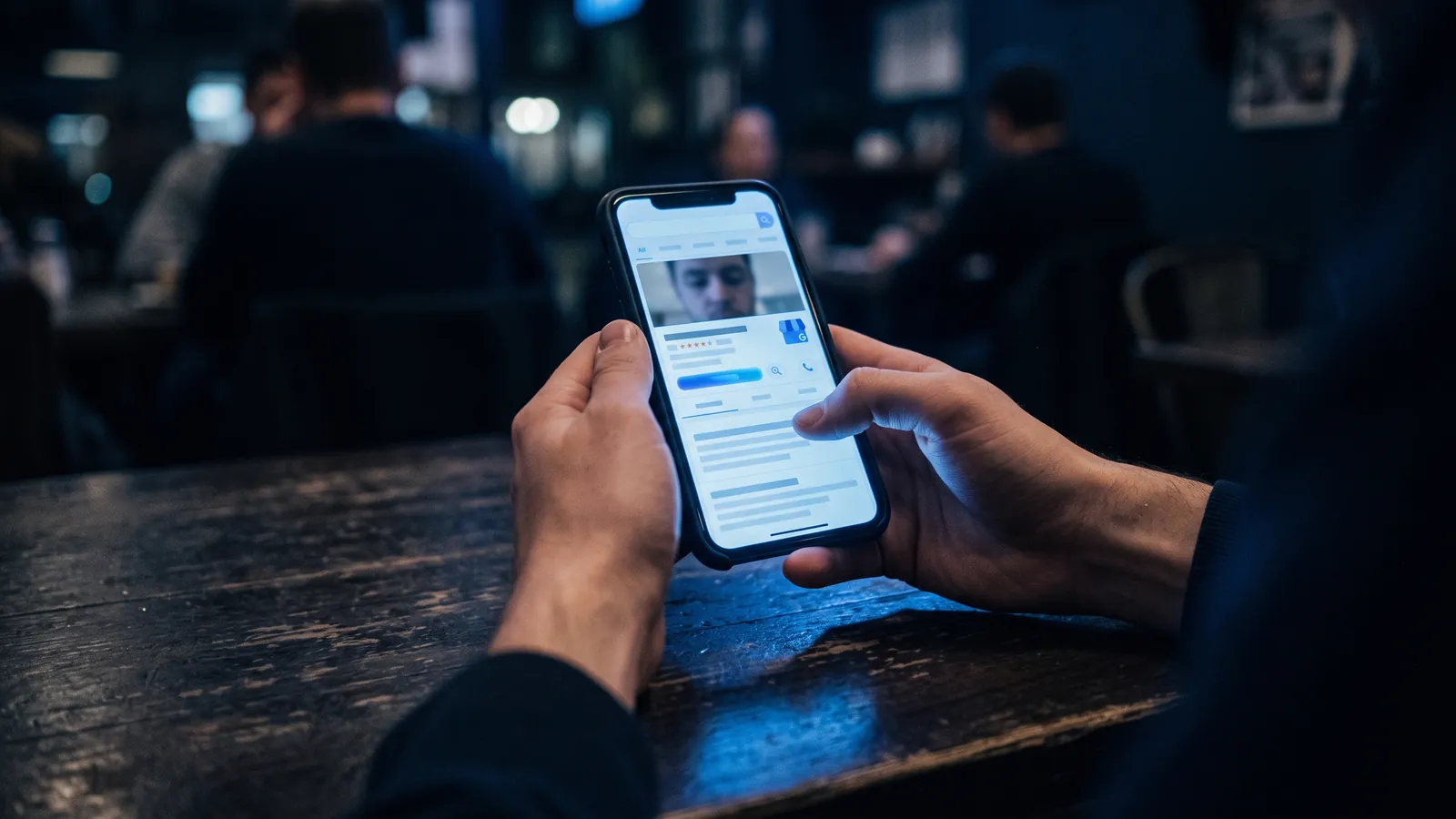
There’s a pretty good chance you pull out your phone and Google the business.
You haven’t called them. You haven’t visited their office. You haven’t met the owner. But within the next few seconds, you’re already forming an opinion.
You see their Google rating. You look at their reviews. You scroll through pictures. You check their website. And sometimes, that’s enough to make you say: “Yeah, I’ll give them a call.” Other times, you quietly go back to Google and look at somebody else.
The business may never even know they lost you.
Your First Impression Doesn’t Always Happen in Person Anymore
Business owners spend a lot of time thinking about the customer experience—and they should. A restaurant wants a clean and welcoming environment. An accounting firm wants its office to feel professional. A contractor wants trucks, uniforms and employees to represent the company well.
But does your online presence receive that same attention?
For many customers, your website or Google profile is the front door to your business. Imagine spending thousands of dollars remodeling your office while your website still looks like it was built 12 years ago. The customer doesn’t know how beautiful your office is yet. They haven’t made it that far.
Let’s Say You Need a Roofer
A storm comes through San Antonio and damages your roof. You’ve never needed a roofing company before, so you search “Roofing company San Antonio TX.”
Several businesses appear. One has a professional website, project photos, clear services, hundreds of reviews and an easy-to-find phone number. Another loads slowly, has broken pictures and outdated information. A third doesn’t have a website at all.
Which company are you most comfortable calling?
None of these companies have actually worked on your roof yet. One with the bad website could have the best roofer in Texas—but you don’t know that. You’re making a decision based on what you can see. That’s why digital presence matters.
Customers Research Businesses Differently Today
Before calling a company, someone might search the company on Google, read reviews, visit the website, look through pictures, check social media, compare competitors, read FAQs, look at pricing or search the owner’s name.
They can do all of this while sitting on their couch. That’s great for consumers, but it also means businesses are being evaluated constantly.
You don’t get to decide whether customers research you. You only get to influence what they find.
Your Website Is Saying Something About Your Business
Every website communicates something—even a bad one.
A modern, organized and professional website can communicate: “We take our business seriously.” A confusing, outdated website can accidentally communicate: “We haven’t paid attention to this in a while.”
That might not be fair. The company could be incredible. But customers have limited information. A good website should quickly tell them who you are, what you do, where you’re located, who you serve, why customers choose you and how to contact you.
Your Website Doesn’t Need to Be Complicated
A good website doesn’t need dozens of pages, crazy animations or complicated technology. It needs to be useful.
If you’re a construction company, show your projects. If you’re a restaurant, show your food and menu. If you’re an accounting firm, explain your services. If you’re a wedding venue, show the property. If you’re an insurance agency, explain the coverage you offer.
Good design isn’t about making something complicated. It’s about making something clear.
The Customer Is Probably Comparing You
Imagine someone in Corpus Christi needs a photographer for their wedding. They search Google and find four photographers they like. Now all four websites are open.
One has beautiful galleries, testimonials, clear packages and an easy way to request availability. Another has little information. Another hasn’t updated its portfolio in years. Another doesn’t work properly on a phone.
The customer begins eliminating options. Businesses sometimes ask, “Why didn’t that customer call us?” The answer may be that they never made it far enough to call. Your website lost the competition before you knew there was one.
What Happens When Someone Googles Your Business?
Try this yourself. Search your business name and look at the entire search result. Are your hours and phone number correct? Do you have recent reviews? Good pictures? Does your website appear and look professional?
Then search for your service instead: “Web design Laredo TX,” “Contractor San Antonio TX,” “Photographer Corpus Christi TX,” “Insurance agency McAllen TX,” or “Business consultant Austin TX.”
Do you appear? Who does? Those companies are competing for customers who may have never heard of any of you. That’s where SEO becomes important.
Google Search and Your Website Should Work Together
SEO can help people discover your business, but getting someone to your website is only half the job.
A strong digital presence connects the pieces: Google gets their attention. Your website explains your value. Your branding builds recognition. Your reviews build trust. Your call to action tells them what to do next.
When those pieces work together, your website becomes more than an online brochure. It becomes part of your sales process.
What About Social Media?
Social media can be excellent for showcasing your work and connecting with customers. But social media and your website play different roles.
Think of social media as rented space. You’re operating inside someone else’s platform. Your website is your own digital property, where you control how your services are presented and where customers go next.
The strongest businesses don’t necessarily choose between social media, Google and a website. They make them work together.
This Matters Whether You’re in Laredo or Austin
A customer in Laredo researches businesses online. So does a customer in McAllen, Corpus Christi, San Antonio or Austin.
Different cities. Same customer behavior. People want information quickly. They want confidence before spending money, and they want businesses to make the next step easy.
Look at Your Business Like You’ve Never Seen It Before
Pull up your website on your phone and pretend you don’t own the company. Give yourself about 10 seconds.
Ask: What does this company do? Would I trust them? Can I quickly find what I need? Does this feel current? Is it easy to contact them? Would I choose this company over the other businesses I just found on Google?
Don’t answer as the owner. Answer as the customer. You might be surprised by what you notice.
Your Customer May Meet Your Website Before They Meet You
You may be incredible at what you do. Your employees may provide excellent service. Your customers may love you. But the new customer doesn’t know any of that yet.
All they know is what they can find. Your online presence should reflect the quality people experience when they actually do business with you.
Today, your first handshake with a potential customer might not happen in your office. It might happen on Google.